

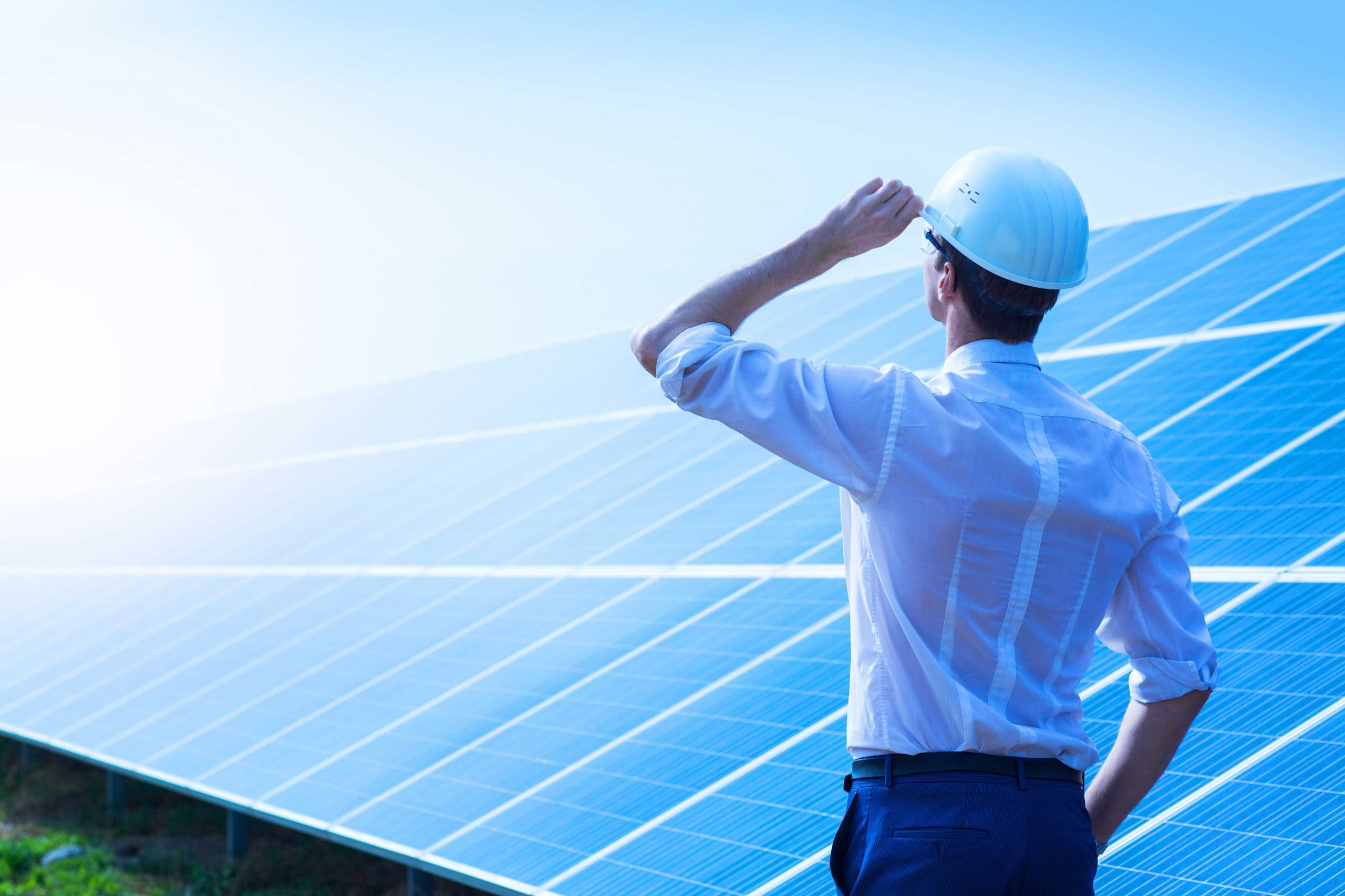
A basic and straightforward configuration for a photovoltaic (PV) system is a fixed flat panel module, which is typically inclined at the latitude angle of the installation site for optimal performance. Unlike other PV options, fixed flat panels do not have moving parts and have the lowest ongoing costs. However, the output per module of this type of PV system is lower than that of systems that track the movement of the Sun.

Solar photovoltaic (PV) options
PV generation technology has been commercially proven for several decades and has been utilized in large multi-megawatt generation plants since the 1990s. Although the costs associated with the technology are high, it is a well-known and reliable source of energy. The most economical way of building PV power stations is through fixed solar panels that are inclined at the latitude angle. PV panels silently convert sunlight into electrical energy, generating direct current (DC) that needs to be converted to alternating current (AC) before being used by the electricity grid. Inverter hardware is required to carry out this conversion, regardless of the PV configuration. Depending on the size and location of the generating plant, PV may be connected to the distribution network at the domestic level of 240V or at a higher voltage.
Concentrating solar thermal (CST) power systems
Concentrating Solar Thermal (CST) power systems focus and gather solar energy to produce high-temperature heat that can be used in a traditional thermal power plant to generate electricity. These systems have three primary components: the solar concentrator, which collects and concentrates sunlight; the solar energy receiver, which absorbs and converts the concentrated energy into usable heat; and the electricity generating plant, which converts the collected heat into electricity. Different types of CST systems, such as parabolic troughs, central receivers, parabolic dishes, and Fresnel systems, are currently being developed.
Parabolic trough
A parabolic trough is a type of solar thermal system that utilizes large reflective parabolic troughs to concentrate solar energy onto a central receiver tube, where it is absorbed. The troughs rotate on one axis to track the movement of the Sun throughout the day. A working fluid, typically oil, is circulated through the receiver and heated to temperatures of around 400ºC. The absorbed heat is then used to generate steam, which is used to power a conventional steam turbine generator. Some parabolic trough systems are capable of generating steam directly.
Power tower
Power tower is a type of concentrating solar thermal (CST) power system that concentrates solar radiation from a large field of mirrors, called heliostats, onto a central receiver located on a tower. The heliostats are computer-controlled and track the sun’s movement to reflect and focus the sunlight onto the receiver. The receiver absorbs the concentrated sunlight and converts it into thermal energy, which is used to heat a working fluid, typically molten salt, to high temperatures of up to 1,000°C. The hot molten salt is then used to generate steam, which drives a conventional steam turbine to produce electricity. Power towers have the potential to achieve higher temperatures and therefore greater energy conversion efficiency compared to other CST systems such as parabolic troughs.